Casa Italiana Zerilli-Marimò (NYU) — New York
Institutional Exhibition · New York University ·
Following the exhibition at the United Nations Headquarters in New York, the cycle of fresco portraits and analytical works by Fabrizio Ruggiero was presented at Casa Italiana Zerilli-Marimò (New York University, New York). This presentation marked a crucial transition of the project from a diplomatic-institutional context to an academic and cultural framework devoted to critical reflection, pedagogy, and cultural transmission.
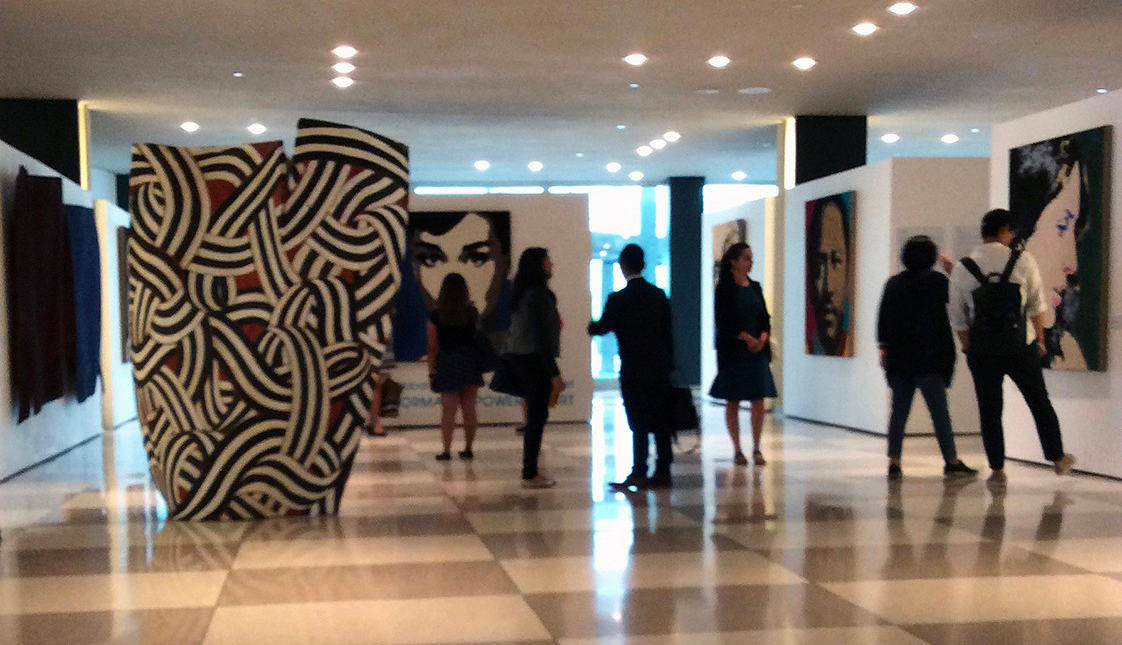
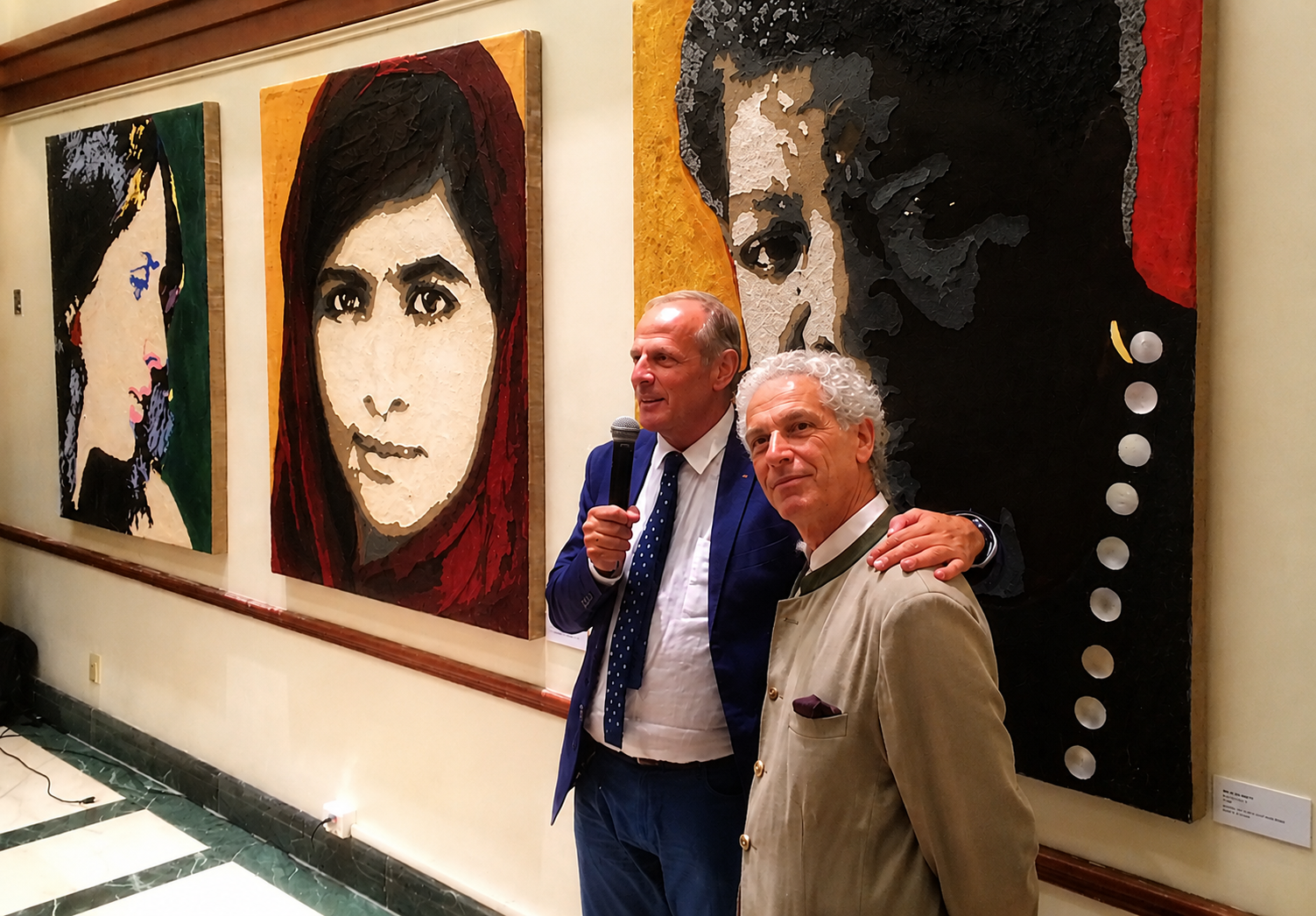
The opening was introduced by Stefano Albertini, Director of Casa Italiana Zerilli-Marimò, together with Giorgio van Straten, Director of the Italian Cultural Institute in New York. Within the corridors of Casa Italiana, the works operated as a silent architecture of presence: not as representations of individual identity, but as effigies — thresholds between singular figures and collective memory.
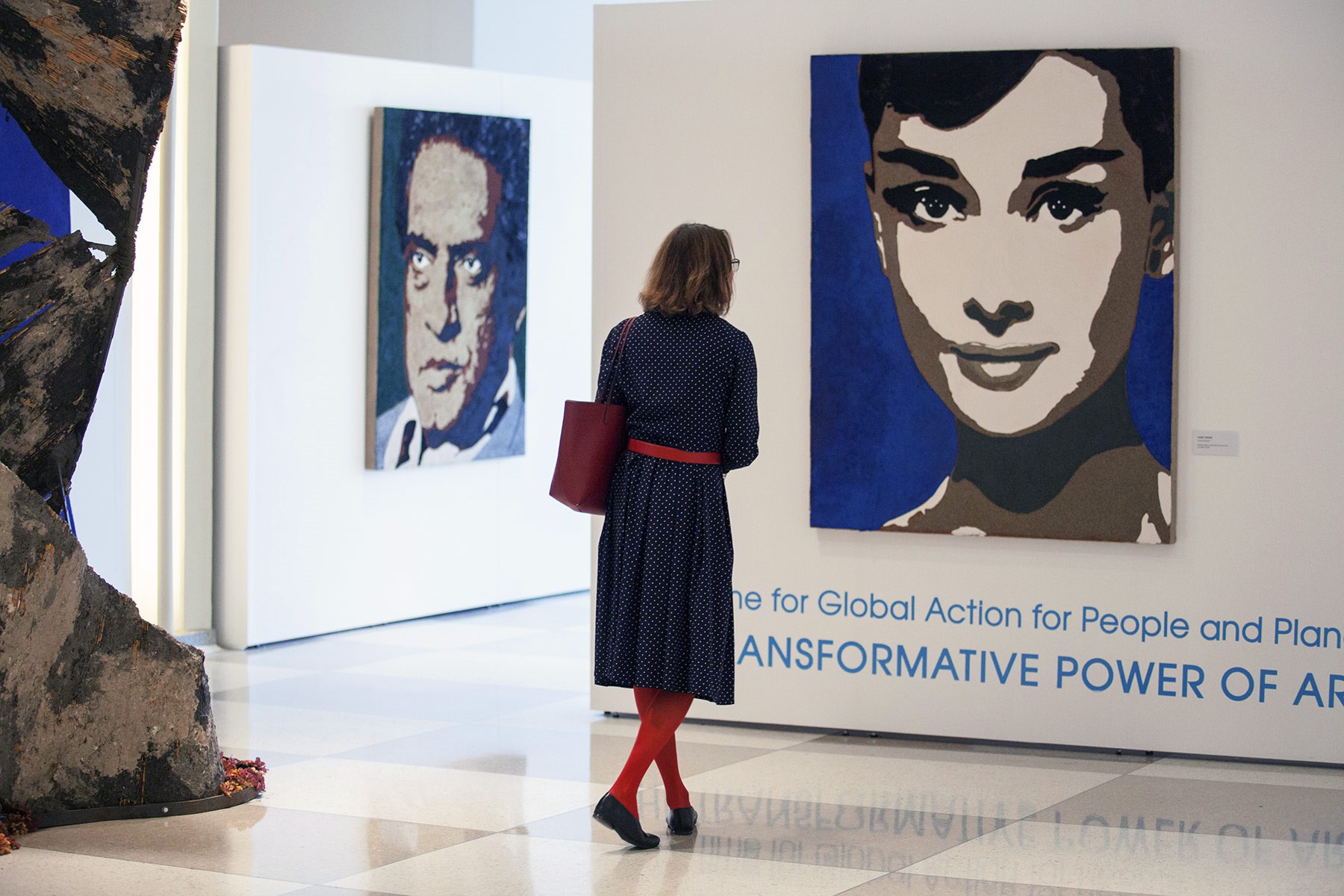
Due to the more intimate spatial conditions of Casa Italiana, only a selection of the original UN presentation could be exhibited. The display included seven portraits alongside a group of abstract frescoes and sculptural elements, offering a condensed yet conceptually complete articulation of the project’s ethical and symbolic framework.
The portrayed figures — writers, photographers, musicians, actors, and artists from different cultural contexts — were chosen for their commitment to human rights and civic responsibility. Figures such as Maya Angelou, Joan Baez, Miriam Makeba, Sebastiao Salgado, Gong Li, Malala Yousafzai, and Joseph Beuys articulate a constellation of cultural agency, where the portrait functions not as commemoration, but as a field of ethical visibility.
Within this institutional context, fresco — historically associated with monumentality and permanence — is reactivated as a contemporary critical medium. The surface becomes an epistemic field in which materiality, time, and perception intersect, situating painting as a reflective structure within cultural institutions rather than as an object of passive contemplation.