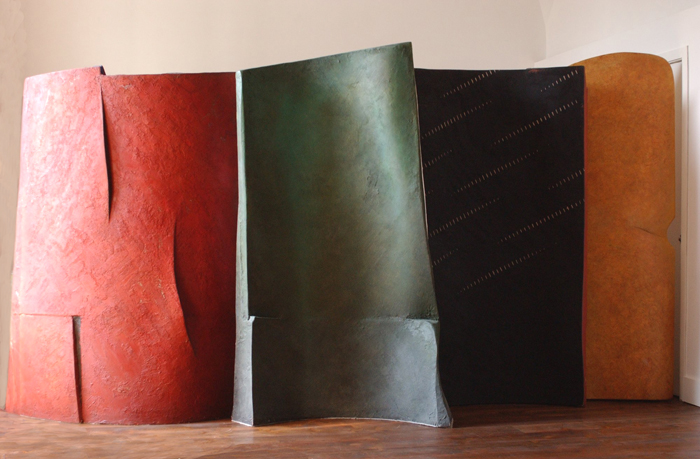
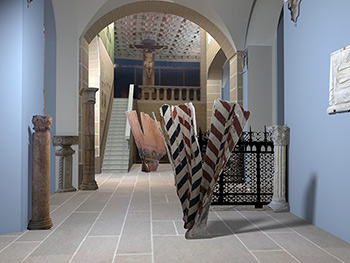
Structure and Form- GRIDS-
Analytical Fresco Paintings-
In modern physics, the universe is thus experienced as a dynamic, inseparable whole which always includes the observer in an essential way.
(Fritjof Capra, The Tao of Physics,
1975)
To explore the artist's work, click on an image below.
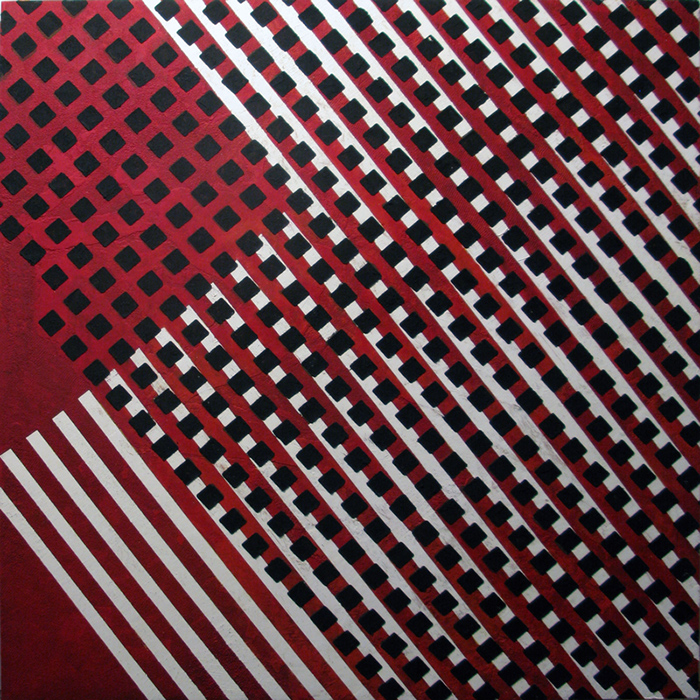
There are two ways in which the grid paintings by Fabrizio Ruggiero assert to be central to Contemporary Art .
One is spatial; the other is temporal.
In the spatial sense, the grid states the autonomy of the realm of art. Flattened, geometricized, ordered, it is antinatural, antimimetic, antireal. In the flatness that results from its coordinates, the grid is the means of crowding out the dimensions of the real and replacing them with the lateral spread of a single surface. In the overall regularity of its organization, it is the result not of imitation, but of aesthetic decree. Insofar as its order is that of pure relationship, the grid is a way of abrogating the claims of natural objects to have an order particular to themselves; the relationships in the aesthetic field are shown by the grid to be in a world apart and, with respect to natural objects, to be both prior and final. The grid declares the space of art to be at once autonomous and autotelic, having an end or purpose in itself.
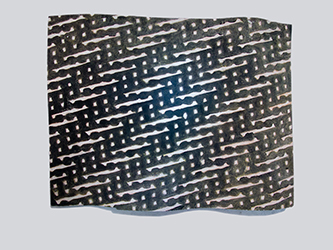
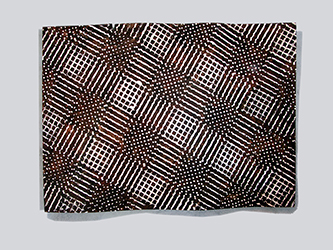
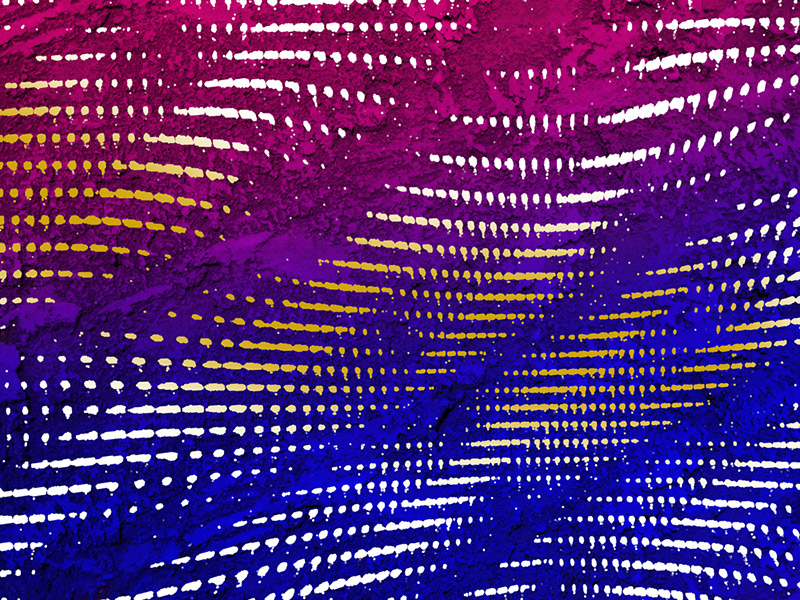
In the temporal dimension, the grid is an emblem of Contemporary by being just that: the form that is ubiquitous, combined to precipitate the grid into a position of aesthetic preeminence. But once the grid appears it seems quite resistant to change, by depriving its world of development, one is obviously not depriving it of quality.
There is no necessary connection between good art and change, no matter how conditioned we may be to think that there is. Indeed, as we have a more and more extended experience of the grid, we have discovered its capacity to serve as a paradigm or model for the antidevelopmental, the antinarrative, the antihistorical.
By "discovering" the grid, FR.. landed in a place that was out of reach of everything that went before. Which is to say, he landed in the present.
.
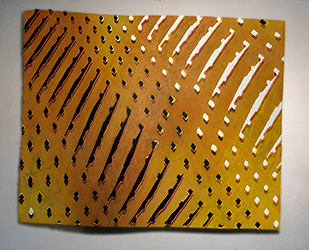
Fresco with lime plaster and natural pigments
on wooden curved panel.
Cm. 114 x 152 = 45 x 60 inches
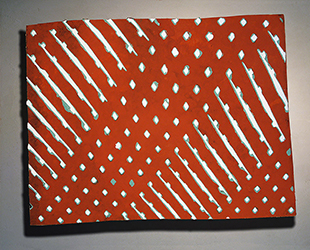
Fresco with lime plaster and natural pigments
on wooden curved panel.
Cm. 114 x 152 = 45 x 60 inches
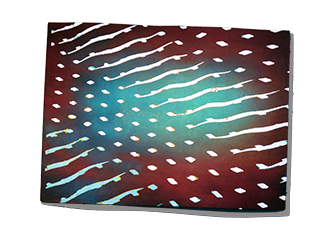
Mental landscape reflex
Fresco on curved and shaped wooden panel.
cm. 90x120
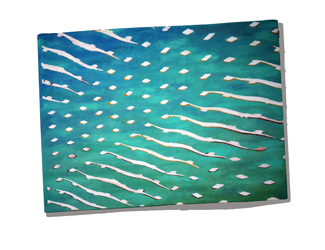
Mental landscape
Fresco on curved and shaped wooden panel.
cm. 90x120.
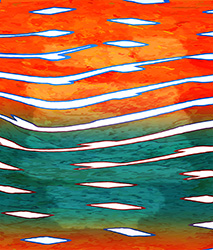
Reflecting on a shining expanse of water
Fresco on wooden panel.
cm. 90x120.
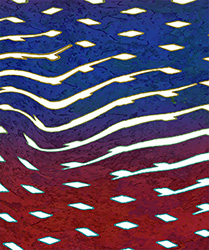
approaching twilight
Fresco on wooden panel.
cm. 90x120.
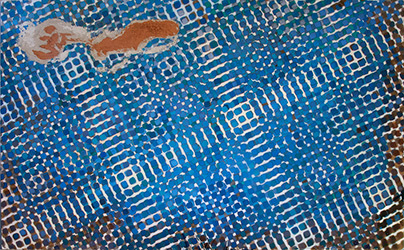
Possible
Fresco on canvas
cm 210 x 130
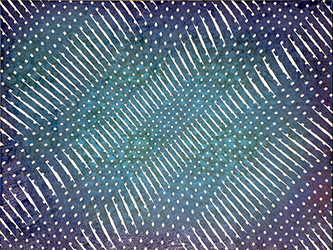
Gravitational Magnet
Fresco on wooden panel.
Cm. 76x100
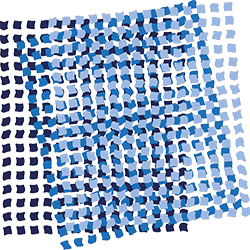
Rhapsody in blue-first movement
Fresco on wooden panel
cm 150 x 150 x 5
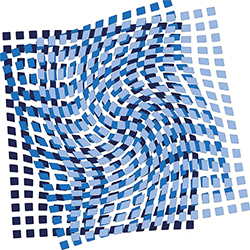
Rhapsody in blue-second movement
Fresco on wooden panel
cm 150 x 150 x 5
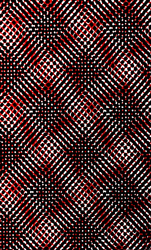
Texture
Fresco on canvas
cm. 118 x 198.
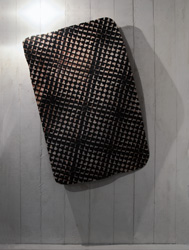
Ombroso
Lime mortar, pigments
on curved and shaped panel
cm 155 x 110 x 10
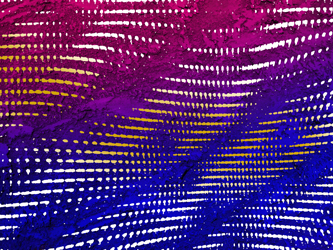
Texture
Fresco on canvas
cm. 118 x 198.
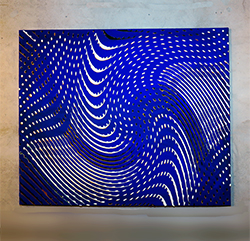
My_Blaue-Reiter_J
Fresco on wooden panel.
cm. 165 x 220
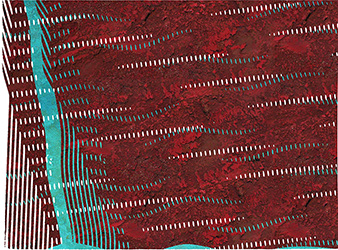
Mycenae-wave
Fresco on wooden panel
cm 80 x 110 x 3
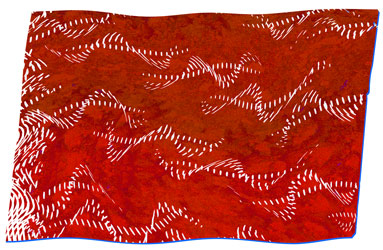
Feeling sensations raising and passing away
Fresco on curved and shaped wooden panel.
cm. 90x120.
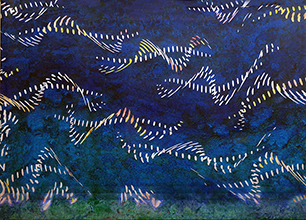
Flock of Mental Birds
Canvas
cm 80 x 110 x 3
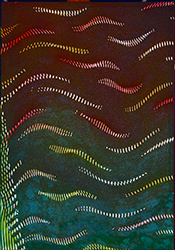
My Deep Sea Aquarium
Canvas
cm. 100x70
“Family Resemblances” MONOTYPES
A monotype is a print, but with one major difference from other printmaking processes:
the artist creates exactly one print, instead of multiples (called editions).
This is due to the way a monotype is made.
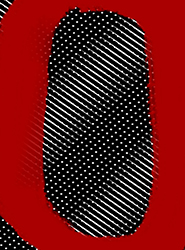
Ax_1
Arches paper cm 76x56
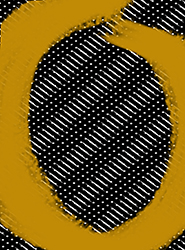
Ax_2
Arches paper cm 76x56
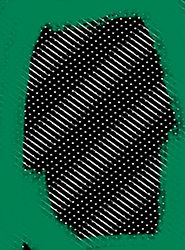
Ax_4
Arches paper cm 76x56
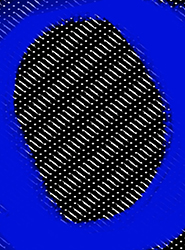
Ax_3
Arches paper cm 76x56