

Art — No Action
Art begins where the impulse to act is suspended. In the recognition of the limits of thought, a different form of attention emerges — one that does not fragment reality, but holds it in its entirety.
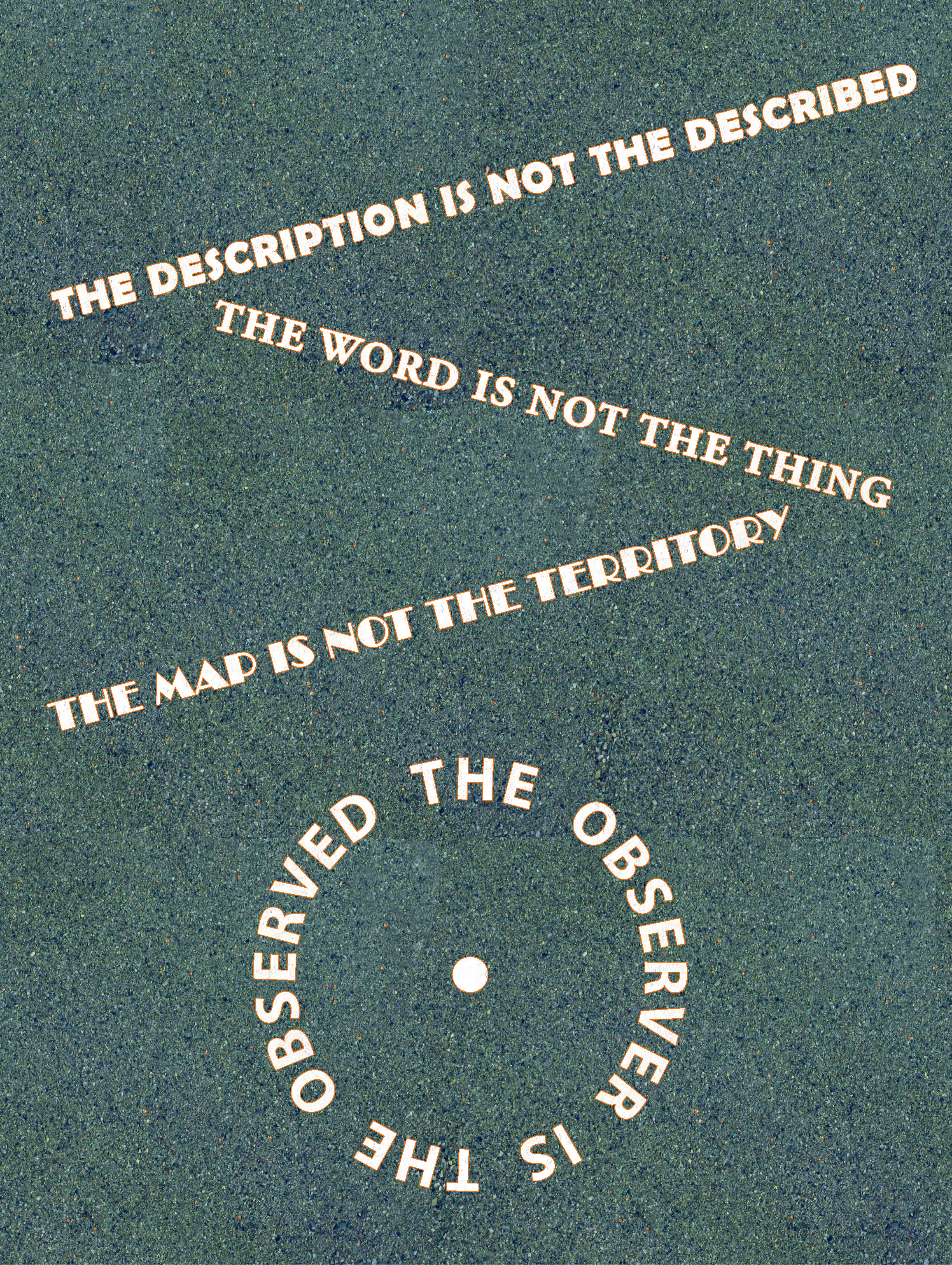
Not gestures to assert, but silences to hold.
The contemporary world is increasingly marked by disintegration, systemic violence, ecological fragility, and the erosion of shared ethical ground. Within such a landscape, the demand for action appears urgent and inescapable. Yet for the artist, the question is not merely how to act, but how to act without reproducing the very logic of fragmentation that shapes the world one seeks to interrogate.
What might constitute a just and accurate action today? Is it possible to conceive an action that is whole rather than reactive, unfragmented rather than strategic — an action that does not simply extend the mechanics of thought into the field of artistic gesture?
Human activity — political, social, economic, moral, and even spiritual — is largely structured by thought. Thought unfolds as memory, as accumulated experience, as projection and anticipation. While indispensable as an operative tool, thought also generates the structures, images, and systems through which reality becomes progressively codified and instrumentalized. When this movement remains unquestioned, the world produced by thought reflects its own internal divisions.
The problem is not thought itself, but the absence of awareness of its limits. When thought is mistaken for totality, when its provisional constructions are taken as reality itself, perception collapses into habit. The image of the world becomes a repetition of what is already known, rather than an encounter with what is.
Artistic practice, in this sense, does not propose solutions in the form of messages, slogans, or narratives. Its task is more restrained and more demanding: to restore each element of experience to its proper place, to recognize where thought is necessary and where it must recede. Art does not instruct; it calibrates conditions of perception.
From this perspective, art is not a form of expression, but a form of precision. It is the careful construction of situations in which attention may be released from automatism, even if only for an instant. The work does not transmit meanings; it reconfigures the field in which meaning becomes possible.
Art, as truth, is not a path to be followed, but a space to be entered.
Practices traditionally described as meditation gesture toward a similar threshold — not as techniques of self-improvement, but as states in which the mind becomes capable of discerning when to operate and when to remain silent. Such silence is not absence, but suspension: the interruption of compulsive interpretation and the softening of conditioned response.
From this suspension emerges a different quality of presence. When the artwork is conceived as a symbolic space rather than as an object of consumption, it can momentarily interrupt the continuum of habitual perception. It does not impose content; it opens intervals within which experience may reorganize itself.
Ultimately, the existential dimension of artistic practice resides here: not in the production of positions, but in the creation of conditions in which attention, duration, and form are allowed to converge without being immediately absorbed into the economies of utility, communication, and interpretation.